Chitabe Camp & Chitabe Lediba
Okavango Delta, Botswana
 Return to Map of Okavango
View images
of Chitabe Main Camp: Chitabe Main Images
View images of Chitabe Lediba Camp: Chitabe
Lediba Images
View Camp Layout Map of Chitabe Camp: Chitabe
Map
View Camp Layout Map of Chitabe Lediba Camp: Chitabe Lediba
Map
CHITABE CAMP RATES: Chitabe
Rates
CHITABE LEDIBA RATES: Chitabe
Lediba Rates
CHITABE CAMP & CHITABE LEDIBA
- OKAVANGO DELTA, BOTSWANA
Chitabe Camp and Chitabe Lediba are operated by
Wilderness Safaris. Chitabe (pronounced Chi-taah-bee) is located in
a 28,000-hectare photographic reserve built on one of the most beautiful
islands in the Okavango Delta, in a private area that is bordered on
three sides by the Moremi Game Reserve. The reserve's boundary in the
east is the Gomoti Channel and the Santantadibe River in the west. The
area is made up of a superb variety of habitats, which include waterways
and marshlands, dry acacia and mopane woodland, riverine areas, open
grasslands and seasonally flooded plains. Access into this area is only
by aircraft. The camp has been operational since 1997 and has developed
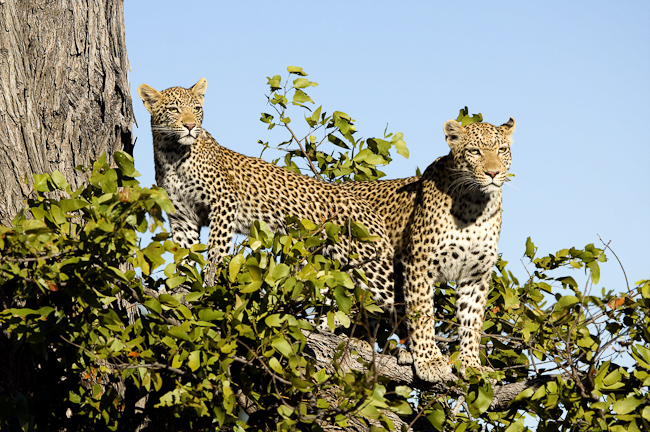
an outstanding reputation, especially with those guests who are interested in leopards.
To enhance viewing: After clicking Play, click the Pause button to allow the video to buffer.
(clicking HD toggles off High-Def quality and will speed buffering but reduces video quality)
Accommodation
Chitabe Camp  For
images of Chitabe Camp, click Chitabe
Main Images For Layout map of Chitabe Camp, click Chitabe Map For
images of Chitabe Camp, click Chitabe
Main Images For Layout map of Chitabe Camp, click Chitabe Map
Chitabe's eight spacious Meru-style tents are built on elevated wooden decks amongst the trees. Each tent has twin beds, en-suite facilities and an indoor as well as an outdoor shower. The thatched dining area, pub and lounge area are built on raised decks to provide superb views across the floodplain, and a pool allows guests to cool off in the heat of the day.
Chitabe also has a splendid pool and
sundeck overlooking the plains for reading and relaxing during the afternoon
while watching the game. The camp area is surrounded by ancient ebony,
leadwood and sausage trees. Complimentary laundry services are provided.
Chitabe Lediba Camp For
images of Chitabe Lediba Camp, click Chitabe
Lediba Images For Layout map of Chitabe Lediba Camp, click Chitabe Lediba
Map
Chitabe Lediba Camp in the Chitabe Concession neighbours the Moremi Game Reserve in the south-east of the Okavango Delta, Botswana. The Chitabe Concession consists of 28 000 hectares of the widest range habitats known to the Okavango Delta. From savannah to tree-filled islands and floodplains, a luxury African safari at Chitabe Lediba Camp makes for the most amazing wildlife sightings.
Chitabe Lediba Camp is smaller than its sister, Chitabe, and offers a much more intimate experience - ideal for small groups or families. Its two family units have adjoining bedrooms and en-suite bathrooms. All five spacious Meru-style tents are built on raised decks. En-suite bathrooms have outdoor showers with panoramic views of the Okavango Delta. Chitabe Lediba Camp has dining area, lounge and pool have a glorious vantage over the small lediba (remnant lagoon that has become a waterhole) after which the camp is named. Guests can view the multitude of wildlife which comes to drink by day from the comfort of the camp itself.
Chitabe Lediba Camp has both morning and afternoon game drives to explore the breathtaking variety of landscapes, habitats and wildlife which border the Chitabe Concession. Afternoon drives usually return after dark in the hopes of spotting the shyer nocturnal animals of the Okavango Delta: such as genet, civet, serval, porcupine and, on the rare occasion, the aardwolf. Chitabe Lediba Camp also has two elevated platforms which can be utilised as a game viewing platform by day.
Game drives take place in the same area as Chitabe Camp's guests, so the viewing experience is identical. Wildlife seen here includes elephant, buffalo, lion, leopard and cheetah; as well as zebra, tsessebe, giraffe, kudu and impala. On occasion guests are also privileged enough to see Wild Dog.
Activities
Both camps at Chitabe offer
guests game drives in open 4x4 vehicles during the day and at night accompanied
by an experienced guide, as well as nature walks. Chitabe is strictly
a game viewing area - no water activities are offered here.
Typically
guests leave for a game drive in the morning and again in the afternoon,
returning usually after dark to take advantage of the many more elusive
nocturnal animals often seen here. The two camps utilize the same game
drive areas, so the game viewing experience is identical at the two
camps.
Wildlife
Game viewing is excellent here, and includes Buffalo,
Elephant, Lion, Leopard, Reedbuck, Lechwe, Impala, Zebra and Hippo. Wild
Dogs are among the major attractions of this area and a long-standing
program to study the Wild Dogs is based nearby (read more on the Wild
Dogs below). Night drives can be very rewarding with good sightings of
the rarer nocturnal animals such as Pangolin, Civet, Serval, Genet, Porcupine
and Aardwolf. Guests will also likely see Zebra, Reedbuck, Red Lechwe,
Impala and all the plains game.
NG 31 - Chitabe Concession
The Chitabe Concession covers 28 000 hectares of pristine Okavango wilderness. It borders the well known Moremi Game Reserve and is nestled between two main river systems, the Gomoti to the east and the Santantadibe to the west. What makes Chitabe unique even in the Okavango Delta is that it harbours such a variety of habitats within close proximity, ranging from classic Okavango scenery with Illala palms dotting floodplains to open savannah and acacia woodlands. A finger of perennial swamps inundated by water throughout the year extends into the Chitabe Concession and the area is also dominated by seasonally flooded areas which transform 56% of the concession from dry floodplains into a lush oasis, when the annual flood waters meander through. All this gives rise to a surprising diversity of species, which allows Chitabe to offer guests a wide range of game viewing and birding experiences.
The high numbers of impala in the area means that leopard are often seen. Also encountered are buffalo, elephant, lion and occasional sightings of wild dog, the subject of the Botswana Wild Dog Research Project that takes place in the area.
The birdlife is excellent and varies throughout the year depending on water levels and season. Raptors are abundant here such as African Hawk Eagle while Hooded Vulture often nests on the island. Game drives in the palm-filled landscape often produce families of Ground Hornbill, Greater Honeyguide, Scarlet-chested Sunbird, Red-billed Hornbill, Gabar Goshawk and coveys of Red-billed Francolin.
Botswana Wild Dog Research Project
Chitabe contributes to the Botswana Predator Conservation Project through their Botswana Wild Dog Research Project. Dave and Helene Hamman, the owners of Chitabe and Chitabe Lediba, have dedicated many years to photographing the African wild dog and their efforts, combined with the extensive knowledge of Dr. "Tico" McNutt, culminated in the book, Running Wild: Dispelling the Myths of the African Wild Dog. Ongoing research, as well as addressing the surrounding communities' attitudes towards these animals, has resulted in a gradual increase in awareness of the plight of the African wild dog.
Operating since 1989, Dr. "Tico" McNutt and his team have accumulated a most extensive database on the behaviour and ecology of the African wild dog, the second most endangered carnivore in Africa. Chitabe Camp, situated within the western part of the study area, works closely with the researchers of the Botswana and contributes toward the funding of this long-running conservation project. Dave and Helene Hamman, the owners of Chitabe and Chitabe Lediba, have dedicated many years to photographing the African wild dog and their efforts, combined with the extensive knowledge of Dr. "Tico" McNutt, culminated in the book, Running Wild: Dispelling the Myths of the African Wild Dog.
Wild dogs require large natural areas in which to roam, hunt and raise young. As Africa becomes more developed, conflicts with humans continue to mean declining populations for these predators through livestock conflicts, disease, poaching and road killing. In addition to the ongoing monitoring of wild dogs, the research programme incorporates a study of the relationships between people, parks and predators, an examination of the wild dogs' system of communication and a survey of the population and ranging behaviour of wild dogs in the marginal livestock areas. Overall programme efforts focus on finding new solutions for the conservation and management of wild dogs and other predators in a complex mosaic of habitats.
Dr. McNutt and the wild dogs featured in the May 1999 edition of National Geographic Magazine and the project has also been the focus of a BBC's Natural World film - 'Newky: A Wild Dog's Story' - that was released in January 2002. Ongoing research, as well as addressing the surrounding communities' attitudes towards these animals, has resulted in a gradual increase in awareness of the plight of the African wild dog.
The tented field camp is located at the south-eastern end of the Okavango Delta on the edge of Moremi Reserve, where the wild dogs and local people's attitudes towards predators have been studied since 1989. The project is associated with the University of Montana and its graduate students are pursuing research on communication, behaviour, conflict management and monitoring of predators here.
The Owners
Chitabe
(and Chitabe Lediba) is owned by Dave and Hélène Hamman,
two well-known and respected characters in the Okavango. Dave and Hélène
have managed a number of camps in Botswana. It was during their time at Mombo Camp that they really became enthusiastic
about wild dogs. They got to know individual dogs and started to follow
them on a daily basis and learnt more of their life histories, their trials
and tribulations. Three years later they co-produced the book Running
Wild - Dispelling the Myths of the African Wild Dog, the definitive
book on these wonderful animals. Dave's passion for photography has developed
into a career and he spends most of his time working as a photo-journalist
on various wildlife and cultural articles for magazines around the world.
In 1996 Dave and Helene were awarded a tender by the Botswana government
to build Chitabe and Chitabe Lediba camp, which was completed in July
1997.
 Top
Return to Map of Okavango
Delta Camps
Top
Return to Map of Okavango
Delta Camps
Water
/ Land Activity Table for Botswana camps: Water/Land
Botswana
Flying
Times between Botswana camps: Fly
Times Botswana
For further information about the Okavango Delta, click More
Okavango
For further information about Botswana, click More
Botswana
|