Doro Nawas Camp
Damaraland, Namibia
 Return to Map of Damaraland & Etosha Return to Map of Damaraland & Etosha
View images of Doro Nawas Camp: Doro
Nawas
Images
View Camp Layout Map of Doro Nawas Camp: Doro Nawas Camp
Map
DORO NAWAS CAMP RATES: Doro Nawas Camp
Rates
DORO NAWAS CAMP - DAMARALAND,
NAMIBIA
Doro Nawas Camp is situated in the ruggedly
beautiful Damaraland area, on a small, rocky outcrop within the floodplain
of a small tributary of the Huab River. This exciting new destination
is a joint venture between Namibian investors, the local Doro Nawas community
and Wilderness Safaris. The camp is located in the valley of the dry
Aba-Huab River with spectacular views of the Etendeka Mountains to the
north and the red sandstone cliffs of Twyfelfontein, famous for its
San petroglyphs (rock engravings) to the south.
The unique lodge design allows for an
unspoilt panoramic view of this diverse and dramatic landscape, which
varies from tabletop outcrops, small canyons, dry riverbeds to savannah
and grassland vistas. The magnificent terrain holds all the possibility
for a sighting of the rare desert-adapted elephant while enjoying a
nature drive or relaxing, viewing the stars from the rooftop of the
main area or from your private veranda.
Doro Nawas provides quality service and
an excellent base for self-drive and fly-in guests to explore the local
area in game drive vehicles. The camp also creates a wonderful
opportunity to contribute to the economic empowerment of the local
community while enjoying a luxury safari experience. The combination
of Africa past and present makes for a memorable experience.
Accommodation  For images of Doro Nawas Camp, click Doro
Nawas
Images
For images of Doro Nawas Camp, click Doro
Nawas
Images
Guests are housed in 16 units,
which combine natural stone and canvas walls with wood and glass doors,
shaded by a thatch roof. The design and décor blends into the surrounding
scenery, with attention to comfort and luxury in these sometimes-abrasive
semi-arid desert conditions. Each unit consists of a bedroom that leads
out to a veranda and outdoor shower. En-suite facilities include a shower, ‘his
and her’ basins and a flush toilet.
Guest Unit details:
• 12 x Twin bedded units
• 3 x Double units
• 1 x Family units
• 4 x twin guide units (not the same standard as a guest room)
• This camp can accommodate 34 guests
• Comfortable, combination canvas and natural walled and thatched roofed units
• Roll out beds with mosquito nets
• Ceiling fans
• Valley facing with wonderful views of the flood plains
• Veranda
• En-suite facilities with indoor and outdoor shower
• Soap, shampoo and insect repellent are supplied in each room
• Safe in each unit
Camp Details:
• Living area combining indoor and roof top dining area
• Open fireplace
• Lap pool adjacent to the main areas
• Bar
• Curio shop and small gallery
The main area is made up of indoor
and outdoor rooftop dining areas, residential pool area, bar, curio and
small gallery and leads to a picturesque courtyard and staircase to the
roof that allows for relaxing sundowners and stargazing. Enjoy wholesome
meals in the dining room and in the evenings absorb the dazzling African
skies from your rooftop terrace before settling down for the night.
Laundry service is included in the nightly tariff for guests booked on a Fully Inclusive basis. Laundry is however limited as a result of a water shortage in this area.
Activities
The camp provides an excellent base for exploring the local area in game drive vehicles and on foot, taking in the spectacular views and desert scenery. Activities include nature drives
focusing on appreciating the spectacular views and desert scenery. Wildlife
viewing concentrates on the game found in the riverbed and along the
valleys that sometimes fill with floodwater in the rainy season. A highlight
is a fascinating expedition to Twyfelfontein, Namibia's first World Heritage Site, with its renowned San
art engravings and the largest collection of petroglyphs – prehistoric
rock art – in
Africa.
Wildlife and Landscape
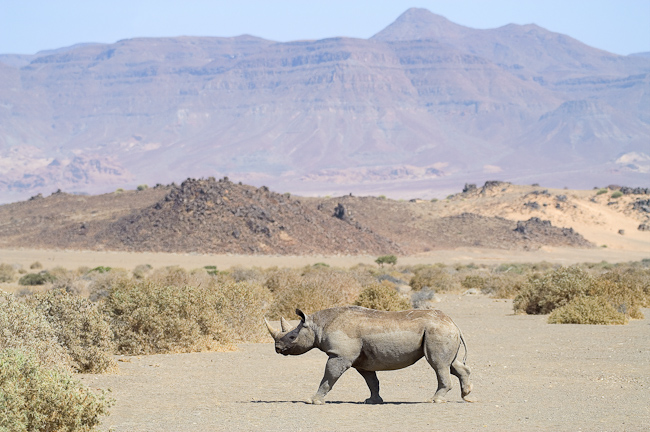
Wildlife viewing concentrates on the game found in the riverbed and along the valleys that sometimes fill with floodwater in the rainy season. There are no large concentrations of wildlife but this arid environment is home to desert-adapted elephant, gemsbok, springbok, kudu, springbok, steenbok, and variety of other species, including occasional glimpses of the endangered black rhino. Carnivores include brown hyena, bat-eared fox and black-backed jackal.
Birdlife is excellent with ostrich and several Namibian endemics such as Rüpell's Korhaan, Benguela Long-billed Lark, Monteiro's Hornbill and Bokmakierie. Raptors are well represented with Secretarybird, Pale Chanting Goshawk, Booted Eagle and Black-chested Snake-Eagle being regulars. Lappet-faced Vulture and Martial Eagle sometimes also put in an appearance.
The landscape ranges from boulder-strewn floodplains, canyons and dry riverbeds to curious rock formations surrounded by sand dunes. Namibia's geological formations are amongst the oldest in the world and visits to spots like the Petrified Forest - 280 million-year-old fossilised tree trunks, Burnt Mountain and Organ Pipes, a mass of perpendicular dolerite pillars, certainly attest to this.
In times of good rainfall this landscape is transformed into a carpet of golden grass and beautiful desert flowers. Seedeaters like Red-billed Quelea are then in abundance at Twyfelfontein 'Dam' and there is always the odd Gabar Goshawk looking for a tasty meal here.
The area is particularly well known as the home of Africa's largest collection of petroglyphs (rock engravings) at Twyfelfontein, a World Heritage Site. These engravings are difficult to date accurately, but archaeologists believe they span a period of about 1,500 to 5,000 years ago. The artists were groups of San who walked the length of the country and recorded images from their journeys on massive sandstone cliffs in the area.
The Torra Conservancy
Damaraland (which includes Doro
Nawas, Damaraland Camp and Palmwag Rhino
Camp) was voted in the top three
of all eco-tourist projects around the world by the British Travel Writers
guild. It is situated in the mountainous region in north-west Namibia
inhabited by the Damara people and named after them. Originally, it was
an area occupied primarily by the Damara people, but it soon became the
home of other tribes such as the Hereros and the displaced Riemvasmakers
of South Africa. Today, many residents of Damaraland are thus of mixed
heritage, but most consider themselves Damara.
The Damara name is derived
from the Nama word "Dama", meaning "who walked here".
This is because the Damara were known to the Nama people by the footprints
they left around waterholes. From their vantage-point in the mountains,
the Damara were quick to spot resources such as water or animals, on
the plains below, and they were therefore able to be the first groups
to reach these essential resources.
The Damaraland community comprises
a unique group of people who have recognized the value of the wildlife
on their land and formed a Community Wildlife Conservancy to protect
it. Until 1981, Damaraland was unprotected and open to poachers,
mostly from outside the area. Eventually, Namibian NGO's formed
a game-guard system with people from the community, and interest
in the welfare of the wildlife increased. After halting the poaching
activities, there were many ideas on how to conserve the area and
its resources sustainably.
In 1996, Wilderness Safaris joined
the community's conservation efforts and co-established what is now
considered the most successful community-based tourism venture in
Namibia. In 1998, the success of Damaraland Camp helped the community
to have their land proclaimed as the Torra Conservancy. It is now
the leader of four Community Wildlife Conservancies in the country.
Today, the Torra Conservancy is one of the most successful in all
of Africa. It meets all its management costs and makes a profit which
is then re-invested into community projects for their benefit. It
is the first community conservancy which is able to sustain itself
without donor funding.
The development of this camp follows on the success of Damaraland Camp in the neighbouring Torra Conservancy. Here Wilderness Safaris and the community members have cooperated in a joint venture that is acknowledged as a shining example of modern community-based ecotourism. The enormous Doro Nawas Conservancy is 407,300 hectares and represents some 450 community members who, in addition to acting as landlords in the conservancy, together hold a 40% share in Doro Nawas Camp. All camp staff are sourced from the community and trained by Wilderness Safaris with the benefits flowing to the conservancy and its members.
In 2007 Wilderness Safaris and the Doro Nawas Conservancy made history when representatives signed one of Namibia's first Joint Ventures with a conservancy. The venture is a pioneering project which supports Vision 2030 goals set to ensure effective management of the nation's natural and human resources critical to economic development.
 Top
Return to Map of Damaraland & Etosha
Top
Return to Map of Damaraland & Etosha
For
further information about the National Parks of Namibia, click Nam
Parks
For
History and General information about Namibia, click More
Namibia
|